Published · Last updated
Sundeep S. Grewal is a lawyer at Lawgical Law Corporation, called to the BC bar in 2018, and a member of the Law Society of British Columbia.
What the interview is for: the officer is deciding whether your marriage is genuine and whether it was entered into mainly for immigration (IRPR s. 4(1)). Failing either part means a refusal.
What decides it: whether your answers match each other, your forms and any earlier interview, and whether you can show the relationship with evidence, not just describe it.
If you are refused: for an outland application, the sponsor has 30 days to appeal to the Immigration Appeal Division. The officer’s interview notes become the main evidence against you, so the appeal has to answer them point by point.
The lawyers who handle these cases
 Sundeep S. GrewalBarrister and Solicitor
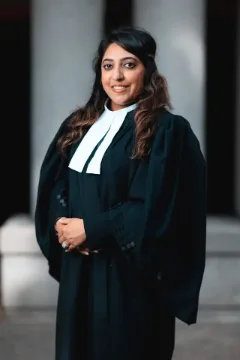 Prabhpreet Kaur SanghaBarrister and Solicitor
 Pardeep S. GrewalBarrister and Solicitor
About our lawyers
Sundeep S. Grewal founded Lawgical Law Corporation and argues immigration cases at the Immigration and Refugee Board and the Federal Court of Canada.
Prabhpreet Kaur Sangha focuses on refugee claims, immigration appeals, inadmissibility, detention reviews and Federal Court cases, and has presented at Continuing Legal Education seminars and the National Immigration Conference.
Pardeep S. Grewal is an immigration and estates lawyer known for clear communication and practical strategy.
Most spousal sponsorships are decided on paper. If IRCC calls you for an interview, the officer usually has a concern they want to test. I act on appeals after these interviews, and I read the officer’s notes in every one. This page is built from those notes: what officers actually asked, which answers they wrote down as problems, and how the notes were used when the refusal went to the Immigration Appeal Division. No client is identified.
Lawgical Law Corporation, an immigration law firm in Surrey, Abbotsford and Vancouver, BC, handles spousal sponsorships and sponsorship appeals for people across BC and Canada; this guide is by Sundeep S. Grewal.
Leave your details and our team will contact you to arrange a time with a lawyer. Or call (778) 598-3785.
Thank you, we have your request
A member of our team will contact you to arrange a time. If your matter is urgent, call us at (778) 598-3785, Monday to Friday, 9:00 am – 5:00 pm.
Is an interview required for a spousal sponsorship in Canada?
No. There is no rule that every spousal sponsorship gets an interview. The officer decides. In the files I see, an interview usually follows one of these:
- an earlier sponsorship of the same couple was refused, or the applicant had an earlier interview;
- the applicant’s immigration history raised questions: an overstay in Canada, a refused permanent residence application, or time spent in another country without status;
- a previous marriage of either spouse, especially a divorce close to the new marriage;
- a marriage arranged quickly or before the couple met in person;
- thin proof of communication or of time spent together.
An interview letter is not a refusal. It does mean the officer has not been persuaded by the paper, and what you say in that room will be written down and kept.
What to expect at the interview
- Who is there: often the applicant alone; sometimes the sponsor too, or both spouses separately. Inland interviews in the files I see were sometimes by video.
- Language: the office normally provides an interpreter. The officer will ask whether you understand the interpreter and tell you to say so if you don’t. Say so the moment you don’t.
- Notes: the officer types notes during the interview, often close to word for word, and pastes them into IRCC’s system (GCMS). Your hesitations, corrections and “I don’t know” answers go in.
- Documents: bring your passports (current and old), originals of what you filed, and your proof of communication. Officers in these files asked to see call logs and photos on the spot.
- The end: the officer usually reads out their concerns and gives you a chance to answer. In every refused file I reviewed, the note after that reads, in substance, “the response did not allay my concerns.” That moment matters more than any other part of the interview.
Spousal sponsorship interview questions: what officers actually asked
These are the kinds of questions from the interview notes in the files I reviewed, grouped by what the officer was testing.
| What the officer was testing | Questions asked |
|---|---|
| Basic facts | What is your date of marriage? How old were you and your spouse when you married? Is this your first marriage? Your spouse’s? |
| A previous marriage | How long did your spouse’s first marriage last? When did they separate? What can you tell me about the previous husband or wife? Why did you agree to marry someone who had been married? Why was the marriage fixed before the divorce was final? Did your family check the background of your spouse? |
| How the marriage came about | Who suggested the match? Had the families agreed before you met in person? Why did you marry in Canada when you planned to marry in your home country? Why not postpone the wedding? |
| The sponsor’s daily life | Where does your spouse work, doing what, and since when? How are their shifts decided? How do they get to work and how long does it take? What do they spend on fuel? When was their last raise? |
| Where the sponsor lives | Where exactly is the home? Is it rented? Who is the landlord? Whose name is on the lease? Why did your spouse move cities in between? |
| Communication | Since when have you been talking? Show me your call logs. Why do they cover only the last few weeks? Where are the records for the past year? |
| Time together | How many times has your spouse visited since the wedding? Why not since then? Why didn’t your spouse come for an important family event? |
| Your own history | How did you get to the other country? What did you do there? Did you make a refugee claim? Why did you return? Would you have stayed if this match had not been found? |
| Earlier answers | In your previous interview you said something different. Why a different answer now? |
In a case where the sponsor was interviewed about the applicant, the questions ran the other way: what medication does your spouse take and why, how many children and grandchildren do they have, do they have a will.
The answers officers wrote down as problems
Reading the notes side by side, the refusals turned on the same few things.
- Getting a basic date wrong, then correcting it. A wrong date of marriage or age, followed by “I was nervous,” was noted against the applicant. The officer offered to reschedule; the applicant went ahead. If you are not in a state to answer, say so before the questions start.
- A different answer from an earlier interview or the forms. Officers had the earlier notes in front of them and asked about each difference. An explanation given for the first time in the room was rarely accepted.
- Not knowing ordinary things about the spouse. The landlord’s name, whose name is on the lease, how the spouse’s work is scheduled, the spouse’s address history. Each “I don’t know” was recorded.
- Proof of communication that starts just before the interview. Call logs covering only recent weeks, with the explanation that the phone no longer shows older records, were treated as no proof for the earlier period.
- Few visits over years of marriage, with no reason the officer found believable.
- A previous marriage the applicant could not explain, or a marriage arranged before the spouse’s divorce was final.
- The sponsor’s own file. In one case the officer found the sponsor had separated from a first spouse while her own permanent residence was still being processed and had not told IRCC. That turned an interview about the new marriage into a question about the sponsor’s own honesty. (See undeclared family members and R117(9)(d).)
- The applicant’s immigration history, such as staying in Canada after a visitor visa, or reaching another country irregularly, with the marriage following a refusal. Officers linked the timing to motive.
When the officer also finds that an answer was untrue, the refusal can add misrepresentation under IRPA s. 16(1) (the duty to answer truthfully) or s. 40. That is a much more serious finding than “not genuine”, because it carries its own bar.
Refused without an interview
Some files had no interview at all: the officer sent a procedural fairness letter, then refused on paper. The reasons in those files followed a pattern too: an online relationship with a long gap before the first meeting and a wedding on that first visit; communication records the officer called superficial; photos from one visit only; little sign of shared finances. If you receive a procedural fairness letter, the response is your interview. Treat it that way.
How to prepare for a spousal sponsorship interview
- Read your own file first. Both spouses should reread the forms, the relationship questionnaire, the letters and any earlier interview notes. If you had an earlier refusal, get the officer’s notes (how to get GCMS notes). The next officer will have them.
- Know the sponsor’s ordinary life. Work, shifts, commute, home, landlord, lease, who lives there, where the sponsor lived before.
- Bring communication covering the whole relationship, not the last month. If records were lost, explain that in writing before the interview, not for the first time in it.
- Prepare to explain anything unusual before you are asked: a previous marriage, an age gap, a quick arrangement, gaps between visits, your immigration history.
- Answer only what is asked, and don’t guess. “I don’t know” is better than a wrong answer that contradicts your spouse.
- Use the last minute well. When the officer reads out the concerns, answer each one specifically. Ask to send documents afterwards if you have them.
Don’t memorise scripted answers. Officers in these files noted answers as “overly rehearsed” and gave them no weight.
What happens after the interview
The officer may approve, ask for more documents, send a procedural fairness letter, or refuse. A refusal letter is short; the reasons are in the officer’s notes, which you can request, and which IRCC sends to the Immigration Appeal Division if you appeal.
Refused after the interview: why the appeal is usually the next step
For an outland (visa office) application, the sponsor can appeal to the Immigration Appeal Division under IRPA s. 63(1). The notice of appeal must reach the IAD within 30 days after the sponsor receives the decision and reasons (IAD Rules, r. 16(a)).
| Appeal to the IAD | Apply again | |
|---|---|---|
| Who decides | An IAD member, after a hearing | A new visa officer |
| Evidence | New documents and testimony from both spouses | Only what the new application contains |
| The interview notes | Answered directly, line by line, with evidence and testimony | On file. The new officer sees the first refusal and the notes |
| Deadline | 30 days | None, but a second refusal makes the record worse |
The appeal is a fresh hearing: the member hears both of you and is not bound by the officer’s view. But the notes don’t go away. In the IAD decisions in these files, members relied on the same points the officer had written down: the dates that didn’t match, what the applicant didn’t know, and the history of earlier marriages. In one dismissed appeal, the member found the main purpose of the marriage was immigration based largely on the sponsor’s own testimony at the hearing.
These refusals can be appealed, and appeals can succeed: after a hearing, or with the Minister consenting to the appeal when the circumstances warrant it. Either way, it comes down to preparation: going through the notes line by line, gathering evidence for every concern, and preparing both spouses to testify.
An inland (in Canada) refusal has no IAD appeal. The route is judicial review in the Federal Court within 15 days (IRPA s. 72(2)(b)). See inland spousal sponsorship refused.
Why have a lawyer for the appeal
- The 30 days are short. The notice of appeal is simple; the work after it is not.
- The officer’s notes have to be read against everything else in the record, and each concern answered with evidence.
- Both spouses testify, often the applicant from abroad through an interpreter. Unprepared testimony can create new inconsistencies, as it did in a dismissed appeal in these files.
- If the refusal includes misrepresentation, the stakes are higher than the marriage alone.
- If the IAD dismisses the appeal, the next step is judicial review in the Federal Court, with permission, within 15 days (IRPA s. 72(2)(b)). The Court mostly looks at the record from the IAD hearing. Evidence that wasn’t filed, an objection that wasn’t raised or testimony that wasn’t prepared is very hard to fix later. Consultants can act at the IAD but can’t go to the Federal Court. When we run a spousal appeal, we build the record so that you are in a strong position for judicial review if the appeal fails. That’s hard to do without doing judicial reviews yourself.
- Early resolution with the Minister is sometimes possible when the evidence is strong. It has to be argued for.
If you have an interview coming up, you can also have the file reviewed beforehand, so you know which concerns the officer is likely to raise.
Frequently asked questions
Is an interview required for a Canada spouse visa?
No. IRCC decides most spousal sponsorships without one. An interview is called when the officer wants to test something in the file.
Are spouses interviewed together or separately?
Either. Often only the applicant is interviewed; sometimes the sponsor too, or each spouse separately, and their answers are compared.
What if we give different answers at the interview?
The officer will note each difference and may ask you to explain it on the spot. One small slip is not usually decisive; several, or a difference on something basic like the wedding date, often is. If you are refused, the IAD appeal is where those differences can be explained with evidence and testimony.
Can I see what the officer wrote about my interview?
Yes. You can request your GCMS notes, and on an IAD appeal IRCC sends the appeal record, which includes them.
Can I bring a lawyer to the interview?
There is usually little point. A lawyer at the interview generally can’t speak for you or interrupt the officer. The time is better spent preparing you both before the interview, and acting quickly on any refusal.
How long after the interview will we get a decision?
It varies by office and by whether the officer asks for more documents. A refusal can come soon after the interview.
Related: what happens after you submit a spousal sponsorship · age gaps · reapplying after a refusal · the IAD process
Sources
- IRPR s. 4(1), bad faith relationships
- IRPA s. 16(1), obligation to answer truthfully
- IRPA s. 63(1), sponsorship appeals
- IRPA s. 72(2)(b), judicial review deadline
- Immigration Appeal Division Rules, 2022, r. 16(a)
Ready to book? Open the booking form ↑
This article is general information, not legal advice. Every case depends on its own facts.