Published
Prabhpreet Kaur Sangha is a lawyer at Lawgical Law Corporation, called to the BC bar in 2019, and a member of the Law Society of British Columbia.
Updated November 13, 2026: IRCC’s citizenship interview instructions and test results page, and the Citizenship Act checked that day.
Why: to confirm your identity, check your original documents and confirm you meet the requirements.
Bring: your PR documents, photo ID, every passport and travel document you held in the 5 years before applying, and the originals of what you sent.
Outcome: an interview doesn’t always end with a decision. Residence or identity questions can lead to a questionnaire or a hearing. Why a lawyer
Our immigration lawyers
 Sundeep S. GrewalBarrister and Solicitor
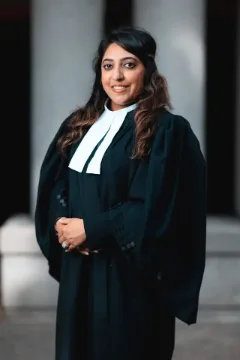 Prabhpreet Kaur SanghaBarrister and Solicitor
 Pardeep S. GrewalBarrister and Solicitor
About our lawyers
Sundeep S. Grewal founded Lawgical Law Corporation and argues immigration cases at the Immigration and Refugee Board and the Federal Court of Canada.
Prabhpreet Kaur Sangha focuses on refugee claims, immigration appeals, inadmissibility, detention reviews and Federal Court cases, and has presented at Continuing Legal Education seminars and the National Immigration Conference.
Pardeep S. Grewal is an immigration and estates lawyer known for clear communication and practical strategy.
After you pass the citizenship test, IRCC may invite you to an interview with a citizenship official. The official confirms your identity, compares your original documents with the copies you sent, and checks that you meet the requirements, including physical presence in Canada. For most people it’s short. If the official has questions about your days in Canada, your identity or your language ability, the interview can lead to more steps.
Lawgical Law Corporation, an immigration law firm in Surrey, Abbotsford and Vancouver, BC, represents citizenship applicants at interviews and hearings and in refusals, delays and Federal Court reviews; this guide is by Prabhpreet Kaur Sangha.
Leave your details and our team will contact you to arrange a time with a lawyer. Or call (778) 598-3785.
Thank you, we have your request
A member of our team will contact you to arrange a time. If your matter is urgent, call us at (778) 598-3785, Monday to Friday, 9:00 am – 5:00 pm.
Why you were invited
IRCC says interviews are used to verify identity, authenticate copies of your documents and confirm eligibility. An officer may also look more closely at:
- Your physical presence: at least 1,095 days in Canada in the five years before you applied (Citizenship Act s. 5(1));
- Gaps or inconsistencies in your travel history;
- Identity documents that don’t match;
- English or French ability, if you’re 18 to 54;
- A possible prohibition, such as a criminal charge or probation (s. 22).
What to bring
| Document | Notes |
|---|---|
| Record of Landing or Confirmation of Permanent Residence, and your PR card | Originals |
| One other photo ID | Ideally with a signature |
| All passports and travel documents | Including any used in the 5 years before you applied |
| Originals of the documents you sent | For example, birth certificate or name-change documents |
| Anything listed in your invitation | Read the letter: it may ask for more |
Canadian citizenship interview questions: what the officer asks
The official checks your documents, asks about your application and your time in Canada, and may assess your language. Minors aged 14 to 17 applying without a parent must attend with the person who applied for them.
Possible outcomes
| Outcome | What it means |
|---|---|
| Approved | You’ll be invited to a citizenship ceremony |
| More documents or a residence questionnaire | The officer wants proof of your days in Canada: see residence questionnaires and citizenship hearings |
| Hearing | With a citizenship officer, or referral to a citizenship judge on residence |
| Refusal | Federal Court, with leave, within 30 days (ss. 22.1–22.2): see a refused or delayed citizenship application |
If you failed the test three times, the interview is a hearing; see the citizenship test and what happens if you fail.
If you can’t attend
Contact IRCC before the date if you can. If you miss it, you have 30 days to give a reasonable excuse. Without one, IRCC can treat your application as abandoned (s. 13.2).
Why a lawyer helps
One lawyer, one file, every step:
- preparing you for questions about presence, travel or identity;
- organizing proof of your days in Canada;
- attending a hearing with you;
- Federal Court review if you’re refused.
Most interviews are routine. When the invitation follows a flag on presence or identity, preparation changes the outcome.
Immigration lawyers are members of a provincial law society (in our case, the Law Society of British Columbia), and only a lawyer can represent you in the Federal Court if a refusal has to be challenged there. An immigration consultant cannot appear in that court for you.
Common mistakes
- Not bringing every passport, including expired ones.
- Travel dates that don’t match the application.
- Guessing at answers instead of checking records.
- Missing the interview without contacting IRCC.
Frequently asked questions
Is there an interview for every applicant?
No. IRCC invites applicants depending on the case.
Do I need to bring expired passports?
Yes. Bring all passports and travel documents, including any you used in the 5 years before you applied.
Will I get a decision at the interview?
Not necessarily. IRCC says interviews don’t always end in a final decision.
Can a lawyer attend?
Ask IRCC in advance. A lawyer can always help you prepare and can represent you at a hearing.
How long after the citizenship interview is the oath?
It varies. If you’re approved, IRCC invites you to a citizenship ceremony, where you take the oath of citizenship. How long that takes depends on your file and on ceremony scheduling, so check your online account and IRCC’s processing times page.
What should I do right now?
Read your invitation, gather every passport and original document, and check your travel dates against your application.
Book a consultation with our immigration lawyers in Surrey, Abbotsford or Vancouver, or online from anywhere.
Ready to book? Open the booking form ↑
Sources (official)
- Citizenship Act, s. 5(1)
- Citizenship Act, s. 22
- Citizenship Act, s. 13.2
- Citizenship Act, ss. 22.1–22.2
- IRCC: Test results and next steps (modified March 31, 2026)
- IRCC: Citizenship – interviewing adult applicants (modified March 9, 2026)
- IRCC: Identity documents applicants must provide at citizenship interviews, hearings and tests
This article is general information, not legal advice. Every case depends on its own facts.