Published
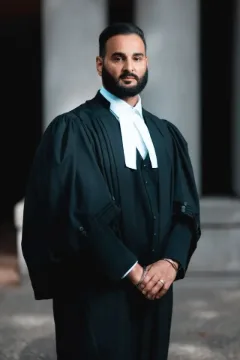
Pardeep S. Grewal is a lawyer at Lawgical Law Corporation, called to the BC bar in 2024, and a member of the Law Society of British Columbia.
Updated November 11, 2026: the Supreme Court Civil Rules (Rules 25-3, 25-4 and 25-8) checked that day.
Before probate: banks often won’t release money, but many will pay the funeral bill and probate fees directly from the deceased’s account.
Estate account: once you have the grant, the bank moves the money into an account in your name as executor.
Small accounts: some banks release small balances without probate, against a statutory declaration and indemnity.
The lawyers who handle these estate files

About our lawyers
Sundeep S. Grewal founded Lawgical Law Corporation and practises probate, estate litigation and immigration. He has represented clients in the Provincial and Supreme Courts of British Columbia, from chambers applications to contested trials.
Pardeep S. Grewal is a probate, estates and immigration lawyer known for clear communication and practical strategy.
When someone dies, their bank accounts are usually frozen, apart from joint accounts that pass to the surviving owner. The executor needs a separate estate account to collect money, pay bills and eventually distribute to beneficiaries. Before probate, banks are often reluctant to deal with the executor, though many will pay a reasonable funeral bill and the probate fees directly from the deceased’s account if shown the death certificate and the will. Some will also open an estate account before the grant so that uncashed cheques can be deposited. After the grant, the bank will need a court-certified copy (often a notarized copy is accepted) to move the money into an account controlled by the executor. Keep the estate’s money separate from your own, and keep a record of every deposit and payment.
Lawgical Law Corporation, a probate and estate law firm with offices in Surrey, Abbotsford and Vancouver, BC, guides executors through dealing with banks and estate accounts; this guide is by Pardeep S. Grewal.
Leave your details and our team will contact you to arrange a time with a lawyer. Or call (778) 598-3785.
Thank you, we have your request
A member of our team will contact you to arrange a time. If your matter is urgent, call us at (778) 598-3785, Monday to Friday, 9:00 am – 5:00 pm.
Before the grant
- Funeral and probate fees: some institutions will pay a reasonable funeral invoice, or give a bank draft to the Minister of Finance for probate fees, from the deceased’s money on production of a death certificate and the will.
- Uncashed cheques: deposit pension, dividend and similar cheques into the deceased’s existing interest-bearing account, or into a new estate account if the bank will open one before the grant, with the executor as sole signatory. Keep full details of each deposit.
- Information: if a bank won’t disclose balances until a grant issues, the applicant can file the affidavit of assets and liabilities later. The registry then issues an authorization to obtain estate information, and anyone holding estate assets must give details within 30 days of receiving it (Rules 25-3(7), 25-4(1) and 25-8).
- Money you spend before the grant is at some risk until probate confirms the will, apart from reasonable funeral costs.
After the grant
- Give the bank a court-certified copy of the grant (often a notarized copy of it is accepted), with ID and any forms it requires.
- The deceased’s accounts are moved into an account in your name as personal representative.
- Pay estate debts and expenses from that account only, and keep receipts.
- Distribute to beneficiaries by letter of direction to the bank, once debts, taxes and waiting periods are dealt with.
Some banks also ask for letters of direction on every transaction, statutory declarations, or a branch visit.
Small estates without probate
If there is only a small amount in an account and no other asset needs a grant, some institutions will release the money without probate, against a statutory declaration and indemnity, the will, a wills search and a death certificate. The threshold depends on the bank. See which assets need probate.
Keep records
Beneficiaries are entitled to see how the estate’s money was handled. A separate estate account and a simple ledger make this easy. See executor accounts.
Mistakes I have seen
- Depositing estate cheques into the executor’s personal account.
- Using an online banking password to move money after death. The executor has no authority to do that, and it causes record-keeping problems.
- Paying beneficiaries from the estate account before debts and taxes are known: see executor personal liability.
Frequently asked questions
Can I open an estate account before probate?
Some institutions will, with the death certificate and will, so that cheques can be deposited. Others wait for the grant.
What happens to a joint account?
It usually goes to the surviving joint owner on production of the death certificate, though there can be questions about whether the survivor holds it for the estate.
Does the estate account earn interest?
Ask the bank. Holding money in an interest-bearing account while the estate is administered is generally sensible.
What should I do right now?
Ask each bank what it needs from you before and after probate, and ask it to pay the funeral bill directly if needed.
Book a consultation with our probate lawyers in Surrey, Abbotsford or Vancouver.
Ready to book? Open the booking form ↑
Sources
- Supreme Court Civil Rules, Part 25 (Rules 25-3(7), 25-4(1), 25-8), BC Laws
- CLE BC, Probate and Estate Administration Practice Manual, §§1.28, 1.29, 1.90, 10.55–10.60
This article is general information about BC law, not legal advice for your situation.